
 All vikis
Gemini 4 Hydrogen API Model ID
The Gemini 4 Hydrogen model ID is gemini-4-hydrogen, with no preview or latest alias, sent to https://generativelanguage.googleapis.com/v1beta/interactions with an x-goog-api-key header, as Google's docs gave it on Nov 17, 2026. A working curl and Python request, the thinking_level values, and the four changes to make when moving from gemini-3.8-flash.
The model ID for Gemini 4 Hydrogen is gemini-4-hydrogen, sent to https://generativelanguage.googleapis.com/v1beta/interactions with your key in an x-goog-api-key header, as Google's model page and text generation guide gave it when we read them on Nov 17, 2026. The model page lists that one stable ID and no -preview or -latest alias, so there is nothing else to try. Google's developer guide says the model works with both the Interactions API and generateContent; Google's own examples now all use Interactions, so the requests below do too.
Next: what Hydrogen costs, its limits and what Google says changed, the other models you can call at no charge or Hydrogen's $1.50 and $7.50 beside every other model's price.
A request to copy
With a key from Google AI Studio in the environment variable GEMINI_API_KEY:
curl -X POST "https://generativelanguage.googleapis.com/v1beta/interactions" \
  -H "Content-Type: application/json" \
  -H "x-goog-api-key: $GEMINI_API_KEY" \
  -d '{"model": "gemini-4-hydrogen", "input": "How does AI work?", "generation_config": {"thinking_level": "high"}}'
The same in Python with Google's Gen AI library, imported as Google's guide does:
from google import genai

client = genai.Client()
interaction = client.interactions.create(
    model="gemini-4-hydrogen",
    input="How does AI work?"
)
print(interaction.output_text)
What each part is, from the pages above: the address is the Interactions endpoint of the Gemini API's v1beta version; model is the ID; input is the prompt, a plain string in Google's examples; generation_config holds the settings; and the reply's text is in output_text. In JavaScript the library is @google/genai and the call is ai.interactions.create({ model: "gemini-4-hydrogen", input: ... }). We put the guide's curl pieces together into the one request above; Google's samples set thinking_level in a separate example.
The settings that matter
| Setting | Values | Default |
|---|---|---|
thinking_level (in generation_config) |
low, medium, high, xhigh |
high |
| Output per response | 65,536 tokens in a normal request; up to 1,048,576 with long decode | 65,536 |
| Context window | 1,048,576 tokens, input and output together | |
temperature, top_p, top_k |
not used: remove them | |
| Explicit context caching | not supported: caching is implicit only |
Source: the model page and the developer guide, read Nov 17, 2026. The guide's long-output example sets "max_output_tokens": 262144 with background=True on the call.
high is the default here, where Gemini 4 Carbon and Argon default to medium (Gemini 4 Hydrogen Release), so a request copied from a Carbon app thinks harder, and bills more output tokens, unless you set the level.
Moving from gemini-3.8-flash
Google's guide lists the change in this order: change the model string from gemini-3.8-flash to gemini-4-hydrogen, remove temperature, top_p and top_k, and remove any explicit caching fields. The fourth change is one you choose: pick a thinking_level, because the default is now the second highest of four.
The money is the reason to do it before the new year. On the pricing page (read Nov 17, 2026) Hydrogen is free on the free tier and $1.50 input and $7.50 output per million tokens on the paid tier. Gemini 3.8 Flash is $0.75 and $3.75 through Dec 31, 2026, then exactly Hydrogen's $1.50 and $7.50 from Jan 1, 2027. A paid app that sends 10 million input and 2 million output tokens a month pays $15.00 on 3.8 Flash and $30.00 on Hydrogen in December, and $30.00 on either from January.
Paul J Lipsky weighed the same trade in his launch-day video of Nov 12, 2026: at its default high thinking level Hydrogen scores above Gemini 4 Argon on the Artificial Analysis Intelligence Index, and its $1.50 input and $7.50 output make it "more expensive than Gemini 3.8 Flash but it's cheaper than Carbon", a gap he expected to widen once Carbon's introductory discount ends.
Google's own launch demo shows the kind of job the ID is meant for: in the Antigravity team's Nov 12, 2026 video, a triage agent that answers a stream of new issues on an open-source project runs on Hydrogen because, the developer says, it can "handle a high volume of traffic".
What we think
We think Google publishes a dated or preview variant of Hydrogen in the Gemini API, a model ID that begins gemini-4-hydrogen- followed by more characters, by May 1, 2027. Google's model page lists a single stable ID today; in our view a dated ID is how Google will ship Hydrogen's first update without changing what the stable name answers for the apps already calling it.
Confidence: Possible. Check by: May 2027.
Sources
- Gemini 4 Hydrogen model page, Google, read Nov 17, 2026
- What's new in Gemini 4 Hydrogen, Google, read Nov 17, 2026
- Text generation, Gemini API docs, Google, read Nov 17, 2026
- Gemini API pricing, Google, read Nov 17, 2026
- Bug Triage with Gemini 4 Hydrogen and Gemini 4 Carbon, Google Antigravity on YouTube, Nov 12, 2026 (video)
- Gemini 4 Hydrogen Just Dropped (Personally Tested), Paul J Lipsky, Nov 12, 2026 (video)
Moments
Gemini 4 Hydrogen Just Dropped (Personally Tested)
Paul J Lipsky
Bug Triage with Gemini 4 Hydrogen and Gemini 4 Carbon
Google Antigravity
Related
-
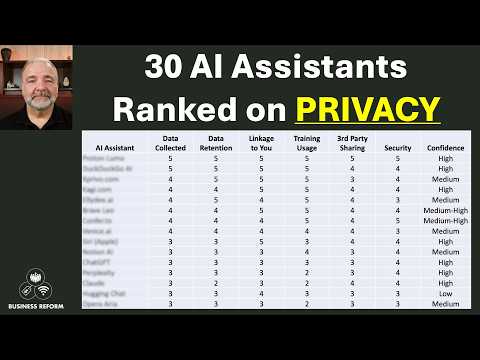 AI Privacy ComparedAs of Nov 6, 2026, ChatGPT, Microsoft Copilot, Mistral's Vibe, Perplexity, Grok and DeepSeek can train on consumer chats unless you opt out, Gemini trains only while Keep Activity is on, and Claude trains only if you allow it; business plans from OpenAI, Anthropic, Microsoft and Perplexity do not train on your data.
-
 AI Subscription PricesAs of Nov 6, 2026 the main AI assistants cost about $20 a month for their standard paid plan (ChatGPT Plus $20, Claude Pro $20, Google AI Pro $19.99) and about $200 for the top plan (ChatGPT Pro 200, Claude Ultra, Google AI Ultra 20x, Grok Ultra), with cheaper tiers from $4.99 (Google AI Plus) and $8 (ChatGPT Go, X Subscription Plus).
-
 AI Video Cost per SecondAI video costs from $0.03 to $0.68 a second on Nov 12, 2026 on Runway's API price list, the one public list that sells most major models at a fixed dollar rate. Gemini Omni 1.2 Flash, first on Arena's text-to-video board, is $0.07 a second at 720p; Seedance 2.5 at 1080p is the most expensive at $0.68.
-
 Best AI BrowserThe best AI browser for most people in Nov 2026 is the one they already use with AI added, Gemini in Chrome, or Perplexity's free Comet for a browser built around an assistant. ChatGPT Atlas shut down on Aug 9, 2026, and every agentic browser carries a prompt injection risk.
-
 Best AI ChatbotWe rate Gemini 4 Carbon and Claude Opus 5.5 S tier and GPT-6 Astra A tier on three independent boards read Nov 10, 2026, and think the free ChatGPT model, GPT-6 Luna, is a D. As of Nov 6, 2026, ChatGPT is the best all-round AI chatbot and the best free one, Claude is best for coding and agent work, and Gemini tops the general text leaderboard and is the best value for Google users.
-
 Best AI Coding AgentWe rate Claude Opus 5.5 S tier and GPT-6.1 Sol A tier, and think Codex with GPT-6.1 Sol is the coding agent most people should run: 60.9% on Terminal-Bench 4.1 for $634 a run against Claude Code's 65.8% for $4,719. As of Nov 6, 2026, Claude Code with Claude Opus 5.5 scores highest on Terminal-Bench 4.0, Codex with GPT-6.1 Sol comes close at a fraction of the cost and is included in every ChatGPT plan, and Cursor and GitHub Copilot are the leading editor-based choices.
-
 Best AI Image GeneratorThe best AI image generator in Nov 2026, by both LMArena and Artificial Analysis votes, is OpenAI's GPT Image 2.5 in ChatGPT, with Google's Nano Banana 2.1, Microsoft's MAI-Image-2.6 and SpaceXAI's Grok Imagine close behind. Adobe Firefly is the pick for commercially safe work and Flux for open weights.
-
Best AI Image to Video GeneratorThe best AI image to video generator on Arena's board of Nov 8, 2026 (read Nov 17) is Google's Gemini Omni 1.2 Flash at 1503, preliminary, in a statistical tie with Seedance 2.5 (1494) and MiniMax H3 (1493). Omni is also the cheapest of the top ten on Runway's API, $0.36 for a 5-second 720p clip from your image, against $1.50 for Seedance 2.5.
See also
-
 Gemini 4 Hydrogen ReleaseGoogle released Gemini 4 Hydrogen on Nov 12, 2026, its fast Gemini 4 model for everyone, free in Google AI Studio and the Gemini API's free tier and $1.50 and $7.50 per million input and output tokens on the paid tier, and rolling out in the Gemini app, Search and Antigravity.
-
 Free AI APIYes, there are free AI APIs on Nov 13, 2026. OpenRouter lists 14 models at $0 per token, capped at 20 requests a minute and 50 a day (1,000 a day after a one-time $10 of credits), and Google's Gemini API has a free tier that includes Gemini 4 Hydrogen. OpenAI's API price list has no free tier.
-
 AI API Cost per Million TokensAI API prices run from $0.075 to $10 per million input tokens and $0.30 to $50 per million output tokens on Nov 13, 2026, across 20 current models from 11 labs on OpenRouter's list. GPT-6 Astra is the dearest at $10 and $50; Gemini 4 Carbon, $2 and $10 today, doubles on Dec 1, 2026.
-
 AI Image Cost per ImageAn AI image costs from $0.01 to $0.75 on Nov 13, 2026 on Runway's API price list. GPT Image 2.5, first on Arena's text-to-image board, is $0.03 for a square 1K image at medium quality; Nano Banana Pro is $0.20, which is 49% over Google's own $0.134.
-
 AI LeaderboardsWe rate Claude Fable 5.2, Gemini 4 Carbon, Gemini 4 Neon and Claude Opus 5.5 S tier, the four models with a top grade on all three independent boards we read on Nov 20, 2026; Fable 5.2 is first on the Intelligence Index at 65 and on LMArena WebDev at 1823, and Gemini 4 Carbon first on LMArena Text at 1527. AI leaderboards rank models by human votes (LMArena), by a mix of tests (Artificial Analysis), or by single tasks such as coding (SWE-bench, Terminal-Bench) and hard exam questions (Humanity's Last Exam). On Nov 6, 2026, Google's Gemini 4 Carbon led both LMArena Text and the Artificial Analysis Intelligence Index, and Claude Opus 5.5 led coding.
-
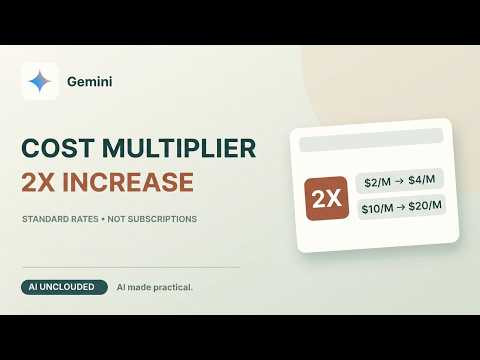 AI Price Changes December 2026Gemini 4 Carbon and Argon double in the Gemini API on Dec 1, 2026 ($2 and $10 per million tokens become $4 and $20), Kling 4.0's 20% discount on Runway ends with Nov 30 UTC, Omni 1.1 API calls move to Omni 1.2 on Dec 3, and Google Flow retires Omni Flash 1.1 and Veo 3.1 Fast on Dec 5, which makes a free 10-second clip cost twice the credits. Every change, read at its source on Nov 17, 2026, with the sums.