
 All vikis
Gemini 4 Neon Release
Google released Gemini 4 Neon on Nov 18, 2026, a fast reasoning model between Gemini 4 Hydrogen and Gemini 4 Carbon, at $3 and $15 per million input and output tokens on the paid Gemini API (no free tier), the default model in Google Antigravity and in the Gemini app for AI Pro and Ultra subscribers.
Google released Gemini 4 Neon on Nov 18, 2026, a third Gemini 4 model that Google's developer guide says "sits between Gemini 4 Hydrogen and Gemini 4 Carbon for high-frequency complex tasks". Developers pay $3 per million input tokens and $15 per million output tokens, flat across the 1 million token window, and there is no free tier, per the Gemini API pricing page (read Nov 19, 2026). The same day it reached Google AI Pro and Ultra subscribers in the Gemini app, Gemini for business (the API and the model menu), Android Studio, and Google Antigravity, where it is now the default model for anyone who has not picked one. Six days after Gemini 4 Hydrogen, it is the third big Google model launch in a week.
What Google says changed
Every claim here is Google's own, from the announcement by Koray Kavukcuoglu and the developer guide:
- Third on the Artificial Analysis Intelligence Index: 61 at the
xhighthinking level, "#3 overall" by Google's count. Hydrogen scored 54 atxhighin Google's Hydrogen announcement six days earlier. - Agents and work tasks: first on Zapier's AutomationBench (56.3%), on Vending-Bench 2 ($16,843), on Legal Research Bench and Tax Agent Bench, and on the Artificial Analysis Coding Agent Index (58.6); second on the Vals Index (70.9%) and on Arena's Agent Arena Index (1336).
- Coding: 65.2% on Terminal-Bench 4.1, 46.2% on FrontierCode 2.0 at
high, and 39.0% on SWE-sweep inside Antigravity against 12.8% with the plain mini-SWE harness. - Cheaper than Carbon per task: at
high, Google says Neon's cost per task is 32% lower than Carbon's, and its security results (AutoBaxBench, CWE-bench v2) are slightly better than Carbon's. - Safety: a 0.0% attack success rate on Gray Swan's indirect prompt injection test at the highest thinking level, a 99.2% agent honesty pass rate and a 0.09% misaligned action rate.
- Neon plans, Hydrogen builds: Antigravity gains an Orchestrator (Neon) that plans with Neon and implements with Hydrogen, beside the Carbon and Hydrogen pairing Google shipped on Nov 12, per the Antigravity changelog.
Google gives no Neon figure for LMArena's text board, where Gemini 4 Carbon still led on our AI Leaderboards reading.
What Neon costs
| Per million tokens | Standard | Batch and Flex | Priority |
|---|---|---|---|
| Input | $3.00 | $1.50 | $5.40 |
| Output, thinking included | $15.00 | $7.50 | $27.00 |
| Cached input (implicit caching only) | $0.15 | $0.075 | $0.27 |
Source: the Gemini API pricing page, read Nov 19, 2026. The page says Neon "is not available on the Free tier". Grounding with Google Search shares the 5,000 free requests a month of Gemini 3 and newer models, then costs $14 per 1,000.
The price makes sense only beside Carbon's change on Dec 1. The same page lists Carbon at $2 and $10 through Nov 30, 2026 and $4 and $20 from Dec 1 (AI Price Changes December 2026). Our sum for a typical agent step of 100,000 input tokens and 10,000 output tokens: $0.45 on Neon, $0.30 on Carbon until Nov 30, $0.60 on Carbon from Dec 1, and $0.225 on Hydrogen. So for twelve days Neon costs more than Carbon, and from December it costs a quarter less; its Batch price is exactly Hydrogen's standard price.
Limits
The model page (read Nov 19, 2026) gives one window of 1,048,576 tokens shared by input, thinking and output. A normal response stops at 65,536 output tokens; with background set to true and a higher max_output_tokens, a response can run to the whole 1 million. It reads text, images, video, audio and PDFs and writes text only; there is no Live API, image or audio output. Code execution, computer use, file search, function calling, structured outputs, URL context and grounding with Google Search and Google Maps are supported, as are the Batch API, Flex and Priority. The rate limits page sets its batch queue at 5,000,000 enqueued tokens on Tier 1, against 3,000,000 for Hydrogen.
The guide lists what breaks when switching from older models: high is the default thinking level (Carbon and Argon default to medium), minimal is rejected with an error, temperature, top_p and top_k must be removed or return a 400 error, explicit context caching is not supported, and Google asks for HTTP client timeouts of at least 15 minutes. Moving from Carbon, Argon or Hydrogen is otherwise only a change of model ID.
Google has not stated Neon's knowledge cutoff, its per-minute rate limits (they show in each project's AI Studio page), whether free Gemini app users can reach it, whether it comes to Search, or which countries the Gemini app rollout reaches first.
What creators say
No official Google video for Neon was on Google's, Google DeepMind's, Google Antigravity's or Gemini's YouTube channels when we looked on Nov 19, 2026. Paul J Lipsky's Nov 18 test was made with early access before launch, as he says in the video; each result is his own run.
On launch day Lipsky found Neon already in the model menu of a $20 a month Pro account without early access, and in Google AI Studio, and says he had seen it in Antigravity too. When he recorded, he could not find Google's benchmarks yet.
In his blind test of a top-down capture the flag paintball game, built with Godot and Blender from the same prompt at high, he preferred the look of the version Neon made over Carbon's. Carbon won his space fighter game test, "but not by much", and Neon won his 90-second animated video test.
In his testing Neon was about two and a half times faster than Carbon. His advice: keep Hydrogen as the daily default, use Neon when you need more, and switch to Carbon only for top-tier results, which he finds harder to recommend now.
Matthew Berman, two days after launch (Nov 20, 2026), read Google's chart against Claude Opus 5.5, which he had called the best model for months, and GPT-6.2 Sol: 61 on the Artificial Analysis Intelligence Index, ahead of both, and 65% on Cursor Bench against Opus's 58, with Neon behind Opus only on Terminal-Bench (by about half a point) and FrontierCode (about one).
What we think
We think Google gives free Gemini app users Neon through auto model selection, as it did with Hydrogen, before Mar 31, 2027. Its Batch price is Hydrogen's standard price, the announcement names only Pro and Ultra in the app, and Google has opened each Gemini 4 model a step wider within weeks of its launch.
Confidence: Possible. Check by: Mar 2027.
We think Carbon's price doubling on Dec 1, 2026 goes ahead as listed, with Neon as the model Google points cost-minded Carbon users to. Google priced Neon to land a quarter below Carbon's December price and made it the Antigravity default on launch day, which a price cut for Carbon would undercut.
Confidence: Likely. Check by: Dec 2026.
Sources
- Introducing Gemini 4 Neon, Google, Nov 18, 2026
- Gemini API changelog, Google, Nov 18, 2026 entry
- What's new in Gemini 4 Neon and the Gemini 4 Neon model page, Google, read Nov 19, 2026
- Gemini API pricing and rate limits, Google, read Nov 19, 2026
- Google Antigravity changelog, Google, Nov 18, 2026 entry
- Introducing Gemini 4 Hydrogen, Google, Nov 12, 2026
- Gemini Neon Is Here (Personally Tested), Paul J Lipsky on YouTube, Nov 18, 2026
- Gemini 4 Neon is ridiculous..., Matthew Berman, Nov 20, 2026 (video)
Moments
Gemini Neon Is Here (Personally Tested)
Paul J Lipsky
- On launch day Lipsky found Neon already in the model menu of a $20 a month Pro account without early access, and in…
- In his blind test of a top-down capture the flag paintball game, built with Godot and Blender from the same prompt at…
- In his testing Neon was about two and a half times faster than Carbon. His advice: keep Hydrogen as the daily default…
Gemini 4 Neon is ridiculous...
Matthew Berman
Related
-
 Genie 4 ReleaseGoogle DeepMind announced Genie 4 on Oct 27, 2026, a world model that generates explorable scenes in real time with their own sound and changes them on a typed prompt mid-run. As of Nov 8, 2026 it is a research preview for trusted testers, with Google AI Ultra and the Gemini API promised as "coming soon".
-
 GitHub Copilot Fusion ReleaseAt GitHub Universe on Oct 28, 2026, GitHub made Copilot Fusion generally available, letting Copilot route and combine models at three effort levels instead of a model picker, with model costs 30% off through Nov 30, 2026. The same day GitHub Enterprise began including Copilot, and Copilot Standalone went on sale at $10 a user a month.
-
-
-
-
 Mistral Studio ReleaseMistral turned Studio into a platform for building and running AI agents on Nov 5, 2026, with managed agents, internal apps and workflows, mostly in public preview, that run in Mistral's cloud, a company's own cloud or on its own servers. Mistral publishes no Studio price, and evaluations and observability are for Enterprise organizations only.
-
 Muse Ember ReleaseMeta released Muse Ember, its smallest and cheapest model, on Nov 9, 2026 for developers on Muse Code and the Meta Model API, at $0.10 per million input tokens and $0.50 per million output tokens, with a 1 million token context window.
-
 Muse Spaces ReleaseMeta added Spaces to its Muse agent app on Nov 6, 2026, everywhere Muse is available: custom planners, trackers and dashboards you describe in words, which Muse builds and keeps current from your connected apps. Meta lists no price for it; Muse is free for most needs, with paid plans for heavier use.
See also
-
 Gemini 4 Hydrogen ReleaseGoogle released Gemini 4 Hydrogen on Nov 12, 2026, its fast Gemini 4 model for everyone, free in Google AI Studio and the Gemini API's free tier and $1.50 and $7.50 per million input and output tokens on the paid tier, and rolling out in the Gemini app, Search and Antigravity.
-
 Gemini 4 Carbon ReleaseGoogle announced Gemini 4 Carbon on Oct 28, 2026 as its strongest model and made it generally available to paying Gemini API developers on Nov 10, 2026, at $2 and $10 per million input and output tokens through Nov 30, 2026, then $4 and $20. It has no free tier and is not in the Gemini app.
-
 AI LeaderboardsWe rate Claude Fable 5.2, Gemini 4 Carbon, Gemini 4 Neon and Claude Opus 5.5 S tier, the four models with a top grade on all three independent boards we read on Nov 20, 2026; Fable 5.2 is first on the Intelligence Index at 65 and on LMArena WebDev at 1823, and Gemini 4 Carbon first on LMArena Text at 1527. AI leaderboards rank models by human votes (LMArena), by a mix of tests (Artificial Analysis), or by single tasks such as coding (SWE-bench, Terminal-Bench) and hard exam questions (Humanity's Last Exam). On Nov 6, 2026, Google's Gemini 4 Carbon led both LMArena Text and the Artificial Analysis Intelligence Index, and Claude Opus 5.5 led coding.
-
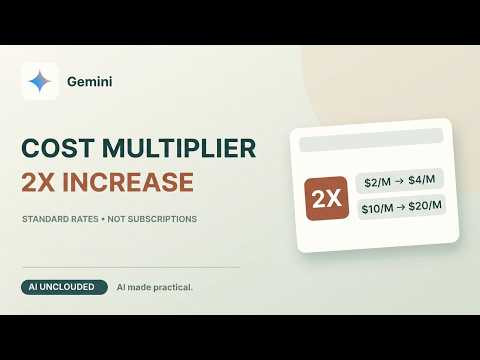 AI Price Changes December 2026Gemini 4 Carbon and Argon double in the Gemini API on Dec 1, 2026 ($2 and $10 per million tokens become $4 and $20), Kling 4.0's 20% discount on Runway ends with Nov 30 UTC, Omni 1.1 API calls move to Omni 1.2 on Dec 3, and Google Flow retires Omni Flash 1.1 and Veo 3.1 Fast on Dec 5, which makes a free 10-second clip cost twice the credits. Every change, read at its source on Nov 17, 2026, with the sums.
-
 Gemini Decision 1 ReleaseGoogle released Gemini Decision 1 and the Decisions API on Nov 11, 2026, for developers in the Gemini API and Google AI Studio. It answers yes or no, multiple choice and rubric questions about text, images, audio, video and PDFs as probabilities, with no text output, at $0.10 per million input tokens and a free tier.
-
 Gemini Omni 1.2 Flash ReleaseGoogle released Gemini Omni 1.2 Flash on Nov 5, 2026, generally available in the Gemini API, Google Cloud, Flow and Google Vids. It makes and edits video clips of 3 to 15 seconds with sound, at about $0.07 a second for 720p, 30% below Omni 1.1, with no free tier.